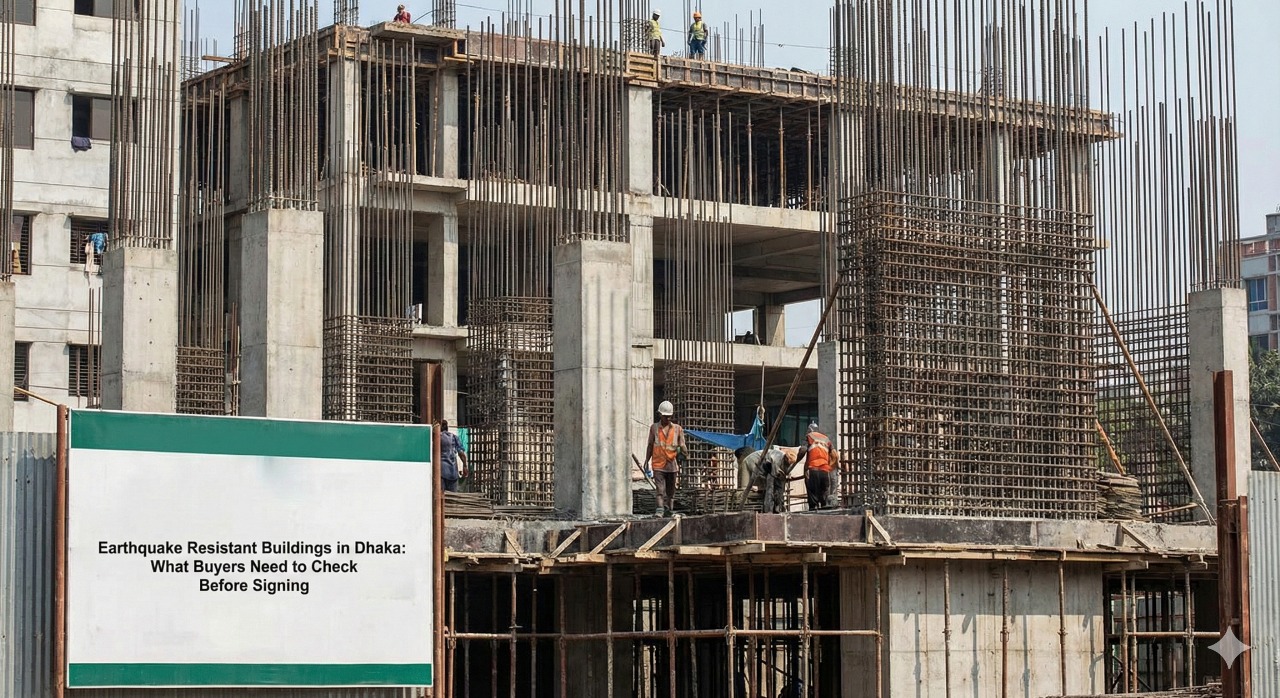
Dhaka is one of the most rapidly urbanizing cities in South Asia, but it also sits in a seismically active zone. For prospective home buyers, the aesthetic appeal of an apartment—its tiles, kitchen fittings, or balcony view—often takes center stage. However, the most critical feature of any high-rise in Bangladesh isn’t visible to the naked eye: structural integrity.
If you are planning to buy an apartment in Dhaka, specifically in developing hubs like Uttara or Mirpur, ensuring the building is earthquake-resistant is not just a legal requirement—it is a matter of life and death.
Here is a technical checklist of what you need to verify with your developer before you sign on the dotted line.
1. Compliance with the BNBC Code
The Bangladesh National Building Code (BNBC) is the bible for safe construction. Updated regularly, this code dictates the standards for load-bearing capacity and seismic resistance.
- What to ask: Ask the developer for the structural design certificate. Explicitly ask if the building design follows the latest BNBC 2020 guidelines regarding seismic loads.
2. Soil Testing and Foundation Type
Not all soil in Dhaka is the same. Areas near rivers or filled lands require deeper, more robust foundations compared to the red soil areas of Gazipur or parts of Mirpur.
- The Check: Request the Soil Test Report. A responsible developer will have conducted a digital soil test before laying a single brick. If the building is a high-rise (G+9 or higher), ask about the piling depth and whether cast-in-situ piling was used for better stability.
3. The Quality of Materials (Steel and Cement)
An earthquake-resistant building relies heavily on ductility—the ability of the structure to sway without collapsing. This requires high-grade steel (rod) and the correct ratio of cement.
- The Red Flag: If a developer offers a price significantly lower than the market rate, they may be compromising on the grade of steel (e.g., using 40-grade instead of 60-grade or 500W TMT bars). Always verify the brand of steel and cement used in the BOC (Bill of Quantities).
4. Engineering Expertise and Transparency
The safest buildings are built by companies that prioritize engineering over marketing. This is where choosing the right partner becomes crucial. You need a developer that doesn’t just outsource construction but supervises it with their own team of engineers.
Reputable developers are transparent about their construction methods. For example, companies like Better Engineering Ltd distinguish themselves by strictly adhering to engineering safety protocols and allowing landowners and buyers to witness the construction quality firsthand. When a developer is willing to show you their “ongoing” construction sites, rather than just a finished showroom, it is a sign of confidence in their structural safety.
5. Fire Safety and Emergency Exits
Earthquakes often trigger secondary disasters like fires. A truly safe building must have adequate fire safety measures.
- The Check: Look for wide fire exit stairs (separate from the main lift lobby), fire extinguishers on every floor, and a functional fire hydrant system.
Conclusion: Safety First, Luxury Second
Buying a flat is likely the biggest investment of your life. While granite countertops can be replaced and walls can be repainted, the skeleton of the building is permanent.
By prioritizing these structural checks, you ensure that your dream home in Dhaka is a safe haven for your family for generations to come. Always choose a developer who speaks the language of safety and engineering before they speak the language of sales.