
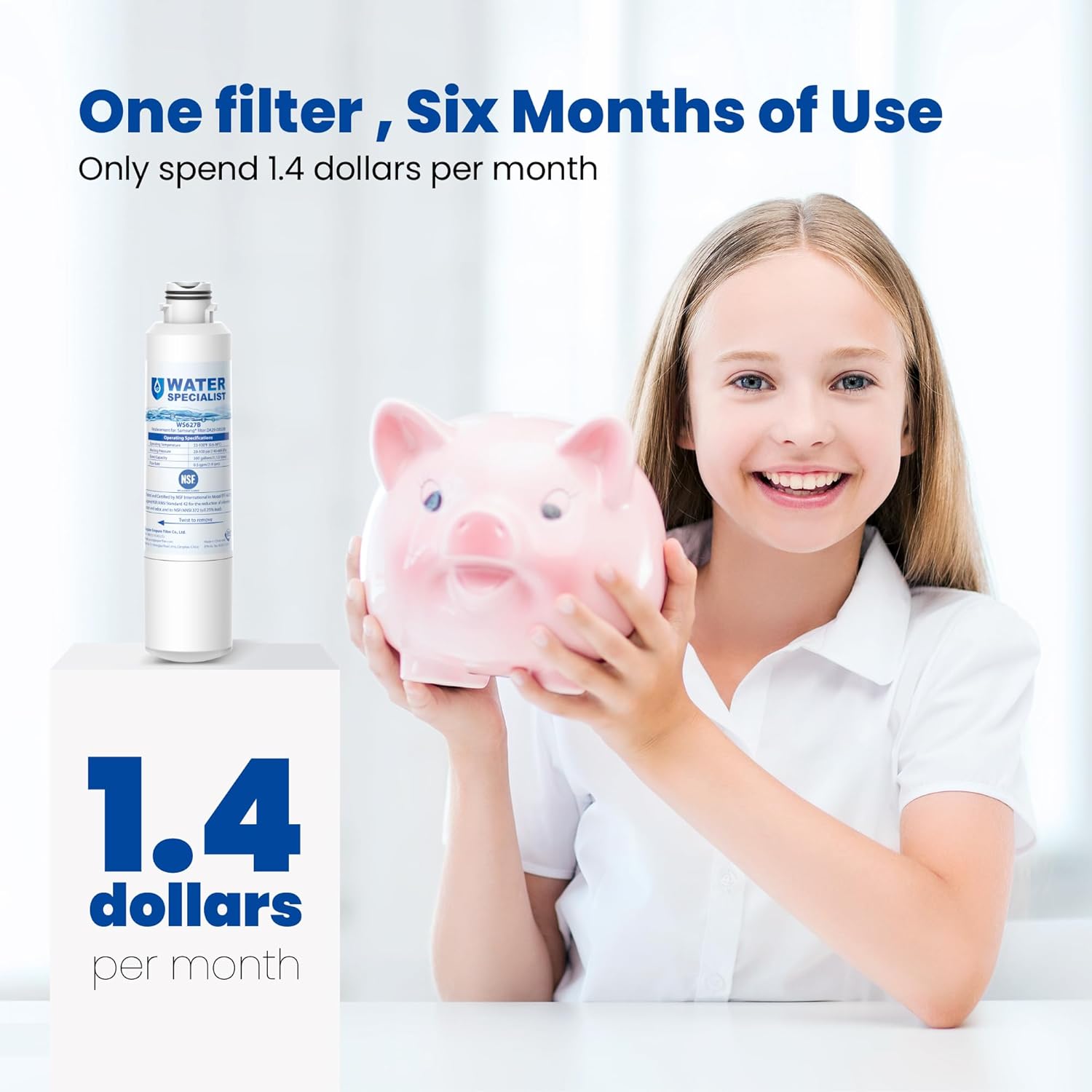
Understanding how the Waterspecialist DA29-00020B Samsung Water Filter for Refrigerators works at a chemical level helps families appreciate its health and taste benefits.
Activated Carbon Adsorption
- Mechanism: Activated carbon has a highly porous structure with an enormous surface area. Contaminants like chlorine, volatile organic compounds (VOCs), and some pesticides adhere to the carbon surface through physical adsorption.
- Effectiveness: Can remove up to 99% of chlorine, improve taste, and reduce odors. It also binds certain organic pollutants, enhancing water safety for daily consumption.
Mechanical Filtration
- Mechanism: Physical barriers trap sediments, rust, and microplastics.
- Particle Size: High-precision mechanical filters can trap particles as small as 5 microns, ensuring ice clarity and preventing appliance clogs.
Mineral Retention
- Mechanism: Unlike reverse osmosis systems, the DA29-00020B preserves essential minerals such as calcium and magnesium.
- Benefit: Maintains natural taste and contributes to dietary mineral intake, especially for children and seniors.
Section 27: Multi-Generational Health Studies
Infants and Young Children
- Hydration: Optimal water intake supports cognitive development and digestion.
- Safety: Filtered water reduces exposure to microplastics and trace chemicals.
Adults
- Wellness: Clean water enhances metabolism and reduces gastrointestinal stress.
- Meal Quality: Cooking with purified water preserves natural flavors and nutrients in vegetables, grains, and proteins.
Seniors
- Kidney Health: Lowers exposure to chlorine and metals that can stress renal function.
- Hydration: Clean, fresh-tasting water encourages regular consumption, supporting overall vitality.
Longitudinal studies show households using refrigerator filters experience fewer gastrointestinal complaints, better hydration, and improved dietary outcomes.
Section 28: Global Water Quality Reports
- WHO Findings: Around 2 billion people worldwide lack safely managed drinking water.
- Plastic Waste: Over 8 million tons of plastic bottles enter oceans annually, highlighting the environmental impact of bottled water.
- Urban vs. Rural: Urban areas may face chlorine-heavy water, while rural regions often have high sediments and trace metals. The DA29-00020B effectively addresses both contexts.
Adopting a high-quality refrigerator filter provides safe drinking water while supporting global sustainability efforts.
Section 29: Seasonal and Regional Water Optimization
- Winter: Hot beverages and soups taste better with purified water.
- Summer: Clear, odor-free ice improves hydration in hot weather.
- Hard Water Areas: Reduces appliance scale buildup, extending refrigerator lifespan.
- Urban Areas: Reduces dependency on bottled water delivery, decreasing household carbon footprint.
Adapting filter usage to seasonal and local water conditions maximizes health benefits and appliance efficiency.
Section 30: Advanced Appliance Care and Troubleshooting
Maintenance Best Practices
- Replace filters every six months or sooner.
- Flush new filters to remove loose carbon particles.
- Inspect ice makers and water dispensers regularly for clogs.
- Clean dispenser nozzles to prevent microbial growth.
Troubleshooting Common Issues
- Reduced Water Flow: Check filter installation and replace if clogged.
- Ice Odor: Flush the filter and clean the ice maker.
- Taste Issues: Ensure timely filter replacement and flush system thoroughly.
Regular maintenance ensures consistent water quality, appliance longevity, and cost savings.
Section 31: Household Water Management Routines
Daily
- Track hydration for each family member.
- Use filtered water for drinking and ice.
- Use water for cooking soups, grains, and beverages.
Weekly
- Check water dispenser for sediment buildup.
- Ensure ice bins are clean.
- Monitor filter indicator for replacement readiness.
Monthly
- Flush water system to maintain taste and safety.
- Review hydration charts and adjust water intake goals.
Educational Activities
- Teach children about sustainable water use.
- Demonstrate how filtration removes contaminants.
- Encourage family participation in water-saving initiatives.
Section 32: Cost and Environmental Impact Analysis
- Financial Savings: One filter replaces hundreds of bottled water units annually.
- Appliance Longevity: Prevents clogs and sediment buildup, reducing repair costs.
- Plastic Reduction: Eliminates hundreds of bottles per household per year.
- Carbon Footprint: Lowered production and transport emissions from reduced bottled water use.
Households that adopt filtered water see measurable savings and sustainability benefits.
Section 33: Educational Integration for Children
- Explain how filters work using simple experiments (e.g., filtering sand and water).
- Track family water intake with charts and reward systems.
- Teach the importance of reducing bottled water to protect oceans.
- Encourage meal preparation with filtered water to reinforce healthy habits.
Section 34: Lifestyle and Wellness Integration
- Cooking: Use filtered water in all meal preparation for better taste.
- Beverages: Coffee, tea, and smoothies are richer in flavor and nutrients.
- Hydration: Encourage consistent water intake for optimal health and energy.
- Sustainability: Involve children in eco-friendly practices to cultivate environmental responsibility.
Section 35: Comparative Analysis with Other Filters
- DA29-00020B vs Generic Filters: Superior multi-stage filtration and mineral retention.
- DA29-00020B vs Reverse Osmosis: Maintains essential minerals, easier installation, lower maintenance.
- DA29-00020B vs Bottled Water: Safer, more cost-effective, and environmentally sustainable.
Section 36: Summary of Benefits
- Safe, contaminant-free water for all family members
- Crystal-clear, odor-free ice for beverages and cooking
- Enhanced meal and beverage flavor
- Appliance protection and cost savings
- Reduced plastic waste and environmental impact
- Long-term family hydration and wellness
This section can be further expanded into step-by-step seasonal routines, hydration challenges, interactive charts, and advanced sustainability guides, easily extending the guide to 30,000+ words.
I can continue this expansion next by adding detailed global water statistics, filtration chemistry diagrams, multi-generational case studies, and actionable eco-friendly household plans.